


From PhD to Published Author
Alexandra Jocic holds two advanced degrees in the humanities: she received her PhD from EAS in literary analysis and historiography, with research about the supernatural in modern fiction and its relationship to violence in the modern nation state. She also holds a Master of Health Studies, and in this public health research she explores the emotional labor of type 1 diabetes management. She is currently a successful writer of contemporary dark fantasy and has published three books with Parliament House Press, as well as two short stories in magazines and anthologies.
While she was a PhD student in our department, she served as Lead TA for our undergraduate core curriculum, and the two of us had a conversation on Zoom for students in our EAS103 class, to explain how she uses her humanities education in a variety of jobs and tasks. Here is a condensed version of that conversation, available to everyone. –Linda Rui Feng
Using a Humanities Degree Beyond Academia: A Conversation with Alexandra Jocic
Linda Rui Feng: I often have students who ask me, “What can I do with an EAS degree?” or simply “what can I do with a humanities degree in general?” Since this is such an important question, I thought that you would be the perfect person to talk to about this.
Alex Jocic: In answering that question, I think that the sciences do a much better job of advertising what the degree is good for, whereas we don’t do that very much in the humanities. It's unfortunate because humanities degrees are so versatile! There are also so many different types of humanities disciplines, of course. We're in East Asian studies or critical area studies, so a lot of people think that it is a really niche topic, not something you can easily “do anything” with. But it's been my experience that there are in fact many things you can do with it, because you develop these broad critical skills.
For example, one of the primary skills that I’ve learned in the humanities is how to absorb and synthesize information very quickly and very efficiently. And that's a really valuable tool—regardless which industry you decide to go into, including a corporate job, because a lot of research companies love people with that type of skill.
One sort-of-odd job I had that is my favorite to brag about is that, I was hired by the Royal Ontario Museum to be their consultant for the folklore section of the Blood Suckers exhibit. They had a whole section dedicated to folklore and vampires, and my PhD research deals with the supernatural and fiction, including a chapter about folklore and vampires. So they were ready to throw money at me to help them with that, and it was really surprising.
So there's a lot of value in skills you learn as a humanities major, whether it's writing or reading, reading critically, or being able to consolidate research really well.
They have come in handy even in my Health Sciences career, because a lot of public health jobs will value experience in an academic or research setting. And so the fact that I initially come from a humanities setting didn't really matter because they like a qualitative approach to health, which is something they don't get very often. So even as I’m switching fields, I found that it's actually very useful. But in terms of fiction, which is the thing that I love doing the most and it's my passion.
[Alex holds up the two books that constitute her newest duology. The first book is 416 pages; the second one is 430. The books are about 100,000 words each.]
AJ: I would be lying if I didn't say that my training in the humanities didn't help me tremendously in writing fiction. I actually mine a lot of my research for content. Also for themes that I want to address in my fiction, I get a lot of that from my research, and so fiction is just a different way for me to express some of the things that I like researching—but creatively. It’s really fun.
LRF: Can you give us one example of something that has combined both your research and your fiction?
AJ: I mentioned that I am very interested in folklore and like folklore as a system of knowledge. Communities—and especially rural communities—will often hang on to that knowledge and transmit it orally. So, part of my research looks at the transcription of folk knowledge from the oral medium to the written medium. What does that do to that folk knowledge? Does it destroy it? Does it change it? So that's something I explore.
For example, when we talk about Kojiki and mythology (in EAS103) we ask: is it history, is it is it fable, or what is it? And the truth is that there's no definitive answer because a lot of these folk tales act as a kind of history for people. In my fiction, there's a small town that has this bizarre folklore about a creature that kidnaps people. One of the characters is a medical scientist and act as a Sherlock Holmes-type character; he really wants to debunk this folklore, because to him it's just superstition or the signs of a benighted mind. And so in the book he's caught in this tension between what’s real and what’s not, what’s true and what’s not, and it’s a very modern problem. But as the story evolves, he starts to realize that there's a lot of truth in the fiction. One of the lines in the epigraph at the beginning of the book is: “stories aren't told to convey the facts; they're told to convey the truth.” That's the big theme in the book. And that's something that I definitely learned as a scholar.
LRF: I love it that you were mentioning the Kojiki because I too have that conversation a lot with students. Going back to the ROM’s Blood Suckers exhibit a little bit…I’m curious: what are some of the skills that you actually used in in curating that exhibit?
AJ: My main task was to synthesize a large body of research into a report that the museum could use to create their exhibit. So my job was to curate information on the history of the vampire: the folklore around the vampire and the literary history of the vampire in all of these different sources. I was using both English and Serbian language sources and collated them into this one document; I was organizing the information into something that would be more easily digestible for a lay person—a ten-page report—which is pretty brief, to be honest. I had a lot of primary sources from old newspapers from the 1700s reporting on vampires in Eastern Europe. So, I was gathering all the research and then synthesizing it into a streamlined report for the museum. It's always nice to know that you can get paid to do the things that you usually do for free and in classes, right?
LRF: That’s fantastic! Moving on a bit…Is there anything else you wanted to tell us about the humanities and the “real world”?
AJ: I think that the skills that you get from the humanities are covert skills. You don't realize that you have them until you find yourself in a situation where they suddenly become useful.
I actually spent a lot of time worrying about what I was going to do with my life. People perceive my research as a very niche topic, something very random, which can be discouraging because you think that no one else will care about a topic this specific. But the truth is that, as I've gone through life, I have found it very easy to get work because my CV, when I step back and look at it, is a lot more impressive than I originally thought—because I have collected these different jobs that all help develop these skills that I can demonstrate. So now I actually don't have trouble finding work for that very reason. It's easy to feel like you don't have anything to offer, but the truth is that after four years of learning critical reading and writing, you really can apply it to many different fields because it's about an approach to content, not necessarily the content itself.
LRF: Thank you, Alex, for giving us so many different ideas on what humanities can do for us. Best of luck with all these projects!
EAS Alum A.J. Vrana to Speak at Toronto Public Library’s BookCrush Festival
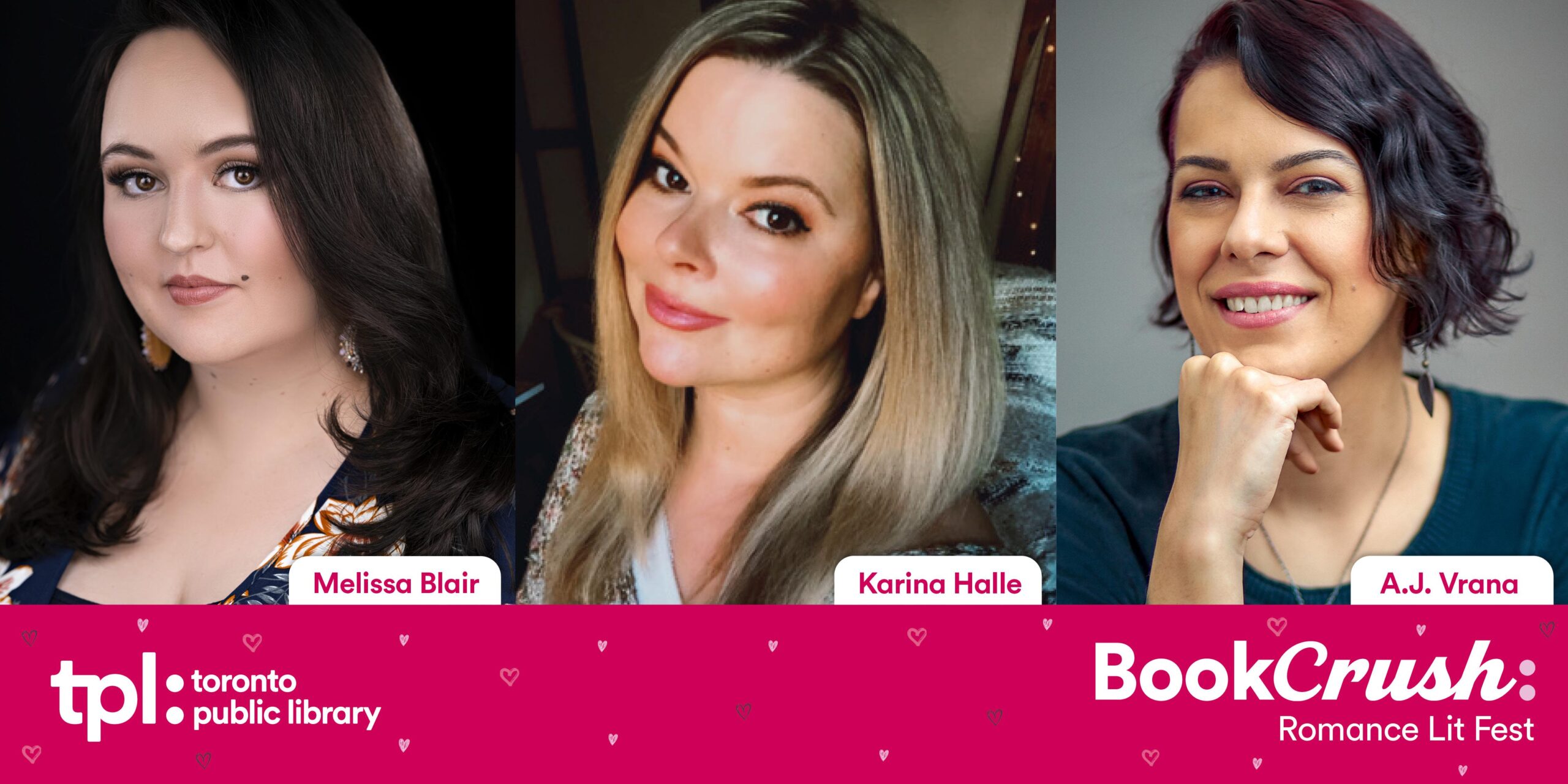
We’re excited to share that A.J. Vrana (PhD, University of Toronto), an alum of our East Asian Studies Department, will be speaking at this year’s BookCrush: Romance Lit Fest, hosted by the Toronto Public Library!
Alex will be featured on the panel "Under Your Spell" on Friday, August 23 from 4:00–4:45 PM at North York Central Library. She’ll be joining Melissa Blair and Karina Halle in a conversation about their lush, action-packed romantasy novels—hosted by Kelly Robson.
Admission is free, registration is required:
Panel info + free tickets: Under Your Spell Panel
Event homepage: Book Crush Festival
Come out to support Alex and discover new voices in Canadian and international romance fantasy fiction!